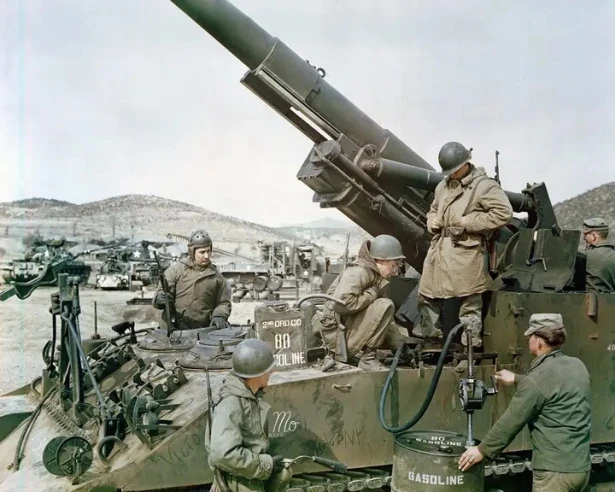
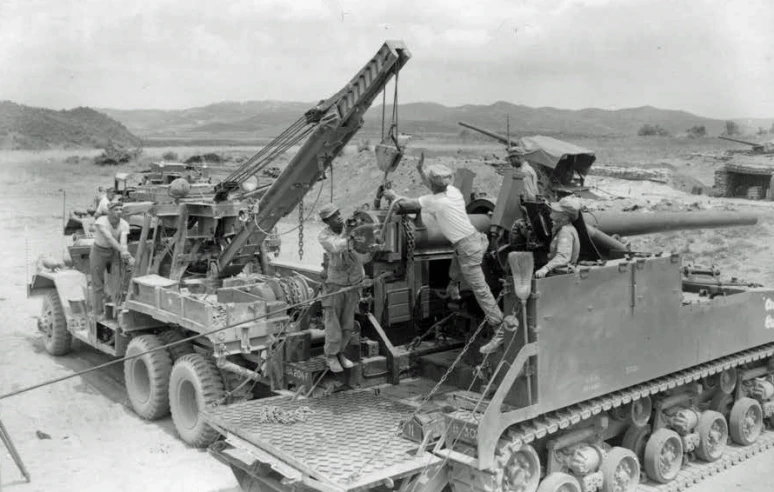
1945 M40 155mm GMC

For sale: A Rare Find, an Exceptional Project

A few years ago, BAIV uncovered an original M40, one of the very few shipped to Europe after its service in Korea.

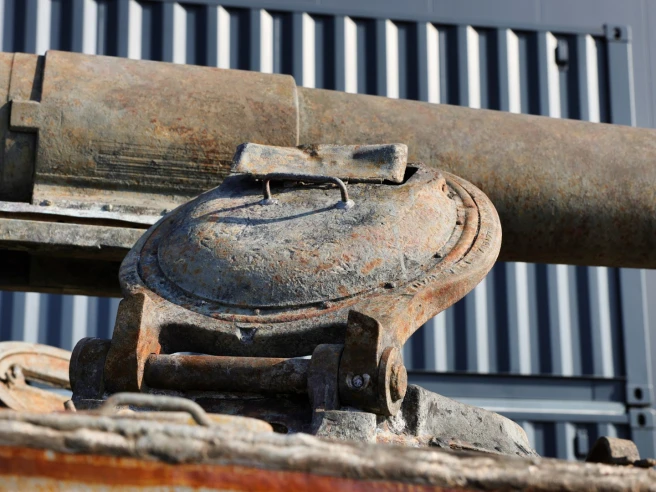
This particular vehicle was transferred to the US forces in Germany and used in training at Grafenwöhr, until a devastating refueling or engine fire in the mid-1960s forced it into early retirement, later followed by an attempt to scrap the vehicle. Ironically, that attempt failed, and the M40 was stored away untouched for over 50 years. Only 311 M40s were ever built; a true rarity with an incredible story.

Current Condition

A small deal of work has already been carried out since this vehicle was recovered in Germany. Below is a structured summary of the completed steps and currently available components:

WHEELS & SUSPENSION
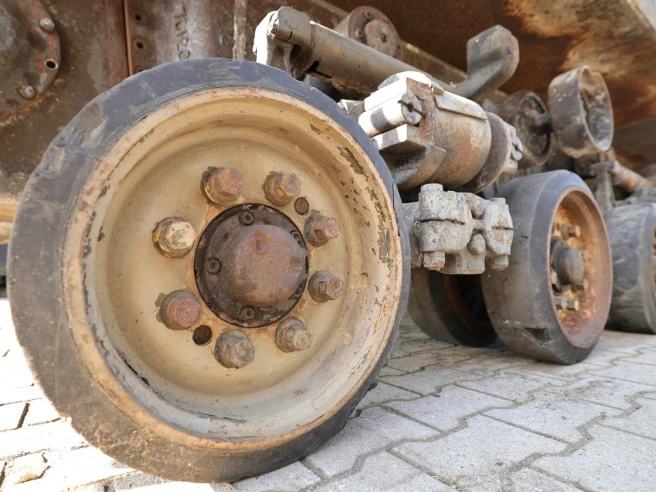
The vehicle has been properly placed back on its wheels, all of which were destroyed in the fire. Each wheel has been brought back in to rolling condition, allowing for safe movement and handling during restoration.

TRACKS & RUNNING GEAR
The full set of running gear, including sprockets, is available. A set of T80 Hybrid tracks has also been sourced and is included with the vehicle.

HULL PLATING
All main steel plates that had previously been cut out or damaged have been carefully replaced. The new sections have been professionally welded in, ensuring structural integrity and authenticity.

FIRE DAMAGE CLEANUP
The fire-damaged areas have been thoroughly cleaned. The engine compartment has been completely emptied and cleared of debris, preparing it for further mechanical work.

GEARBOX & DIFFERENTIAL
The gearbox and differential will be fully replaced as part of the restoration. It still requires a full overhaul. Fortunately, all necessary spare parts, including a complete differential, are already in stock.

FINAL DRIVE (RIGHT SIDE)
A replacement Final Drive unit for the right side was sourced in Canada. It has been temporarily installed for fitting and alignment purposes.

ENGINE
We have secured the original New Old Stock (NOS), never-used Continental C1 engine, ready to be installed during the mechanical restoration phase.

ORIGINAL SPADE RECOVERED
A rare and exciting find: the original matching rear spade, once removed and abandoned during scrapping, was located in Germany and has now been successfully recovered.

ADDITIONAL PARTS
Numerous original components have been sourced, including the original seats and many other key items needed to complete the restoration to a high standard.

RESTORATION TIMELINE & PROCESS
Visually, the vehicle is already largely being completed and made presentable. However, a complete mechanical, technical and functional restoration is still required to bring it to full operational Class A condition.

History

THE M40 155MM GUN MOTOR CARRIAGE
In the final phase of World War II, American industry achieved something extraordinary. Just five months after approval, the M40, a 155mm self-propelled gun, went from blueprint to battlefield. Built on a widened Sherman chassis, equipped with HVSS suspension and wide tracks, the M40 delivered the mobility and firepower the U.S. Army had long been searching for.
But it wasn’t just a technical breakthrough; It was a bold step into the future based on innovation and cleverness of American engineering.

DEPLOYMENT
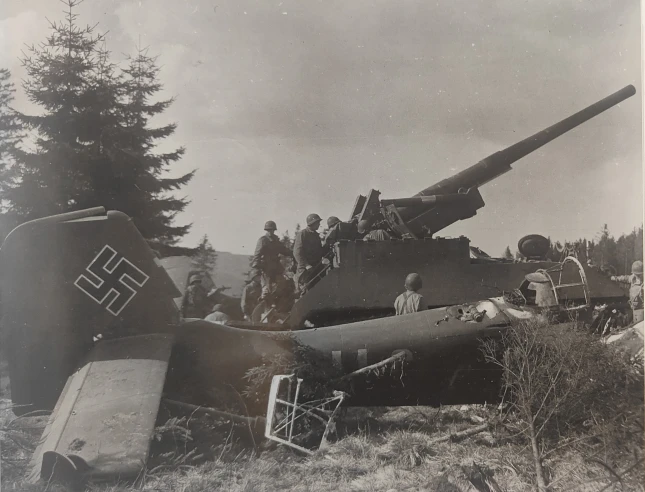
As part of the famed ‘Zebra Mission’, two of the first M40s was deployed to Europe in early 1945 and fired the very first American artillery shell into the besieged city of Cologne. Too late to influence the war’s outcome, but right on time to shape the artillery of tomorrow.

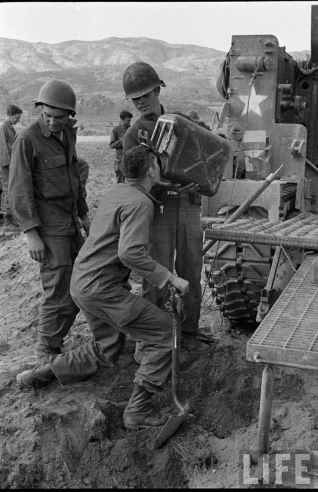
Post-war, the M40 became the backbone of U.S. heavy artillery during the Korean War, where it proved its worth under real battlefield conditions. Rugged, powerful, and ahead of its time, the M40 inspired a new generation of mobile artillery platforms and remains a symbol of American innovation and determination.

Only a handful of M40s remain today, all in museums or on static display.

Help keep our shared story alive

Historic military vehicles are more than just a hunk of steel. They represent engineering, craftsmanship, emotion, and an important chapter of our history. Step into the world of historic military vehicles and help us keep this heritage running.